Accession
MI0001255
Description
Gallus gallus
gga-mir-133c precursor miRNA
Literature search
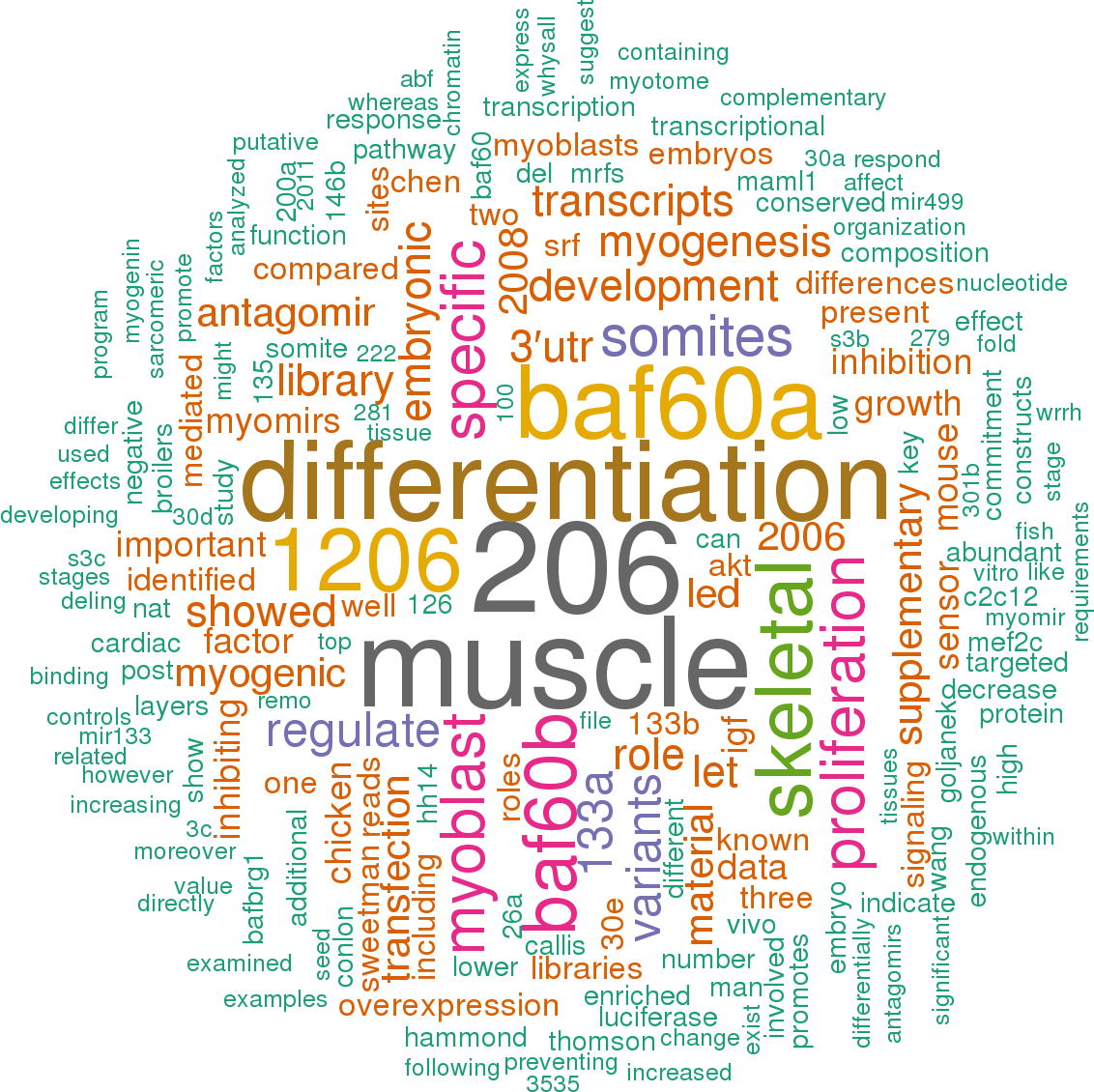
21 open access papers mention gga-mir-133c
(90 sentences)
(90 sentences)
Sequence
2986
reads,
40
reads per million, 4 experiments

ugccuuccugggGCUGGUAAAAAGGAACCAGAUCaacuacaacuggauUUGGUCCCCUUCAACCAGCUGCaguggggca
((((((.(((.(((((((..((.((.((((((((...........)))))))).)).))..))))))).))).))))))
((((((.(((.(((((((..((.((.((((((((...........)))))))).)).))..))))))).))).))))))
Structure
      c   g       AA  A  A        aacu
ugccuu cug gGCUGGU  AA GG ACCAGAUC    a
|||||| ||| |||||||  || || ||||||||    c
acgggg gaC UCGACCA  UU CC UGGUUuag    a
      u   G       AC  C  C        guca
Annotation confidence
High
Do you think this miRNA is real?
Comments
This sequence is a predicted homologue of a verified miRNA from human, mouse or rat. Its expression has not been validated in chicken.
Genome context
chr23: 4357164-4357242 [+]
Clustered miRNAs
2 other miRNAs are < 10 kb from gga-mir-133c
| Name | Accession | Chromosome | Start | End | Strand | Confidence |
|---|
Database links

Mature gga-miR-133c-3p
| Accession | MIMAT0001176 |
| Description | Gallus gallus gga-miR-133c-3p mature miRNA |
| Sequence | 49 - UUGGUCCCCUUCAACCAGCUGC - 70 |
| Evidence |
experimental
Illumina [2] |
Mature gga-miR-133c-5p
| Accession | MIMAT0026537 |
| Description | Gallus gallus gga-miR-133c-5p mature miRNA |
| Sequence | 13 - GCUGGUAAAAAGGAACCAGAUC - 34 |
| Evidence |
experimental
Illumina [2] |
References
|