Accession
MI0000114
Symbol
HGNC:
MIR107
Description
Homo sapiens
hsa-mir-107 precursor miRNA mir-103
Gene
family?
family?
RF00129;
mir-103
Summary
Caution, this is an AI generated summary based on literature. This may have errors. ?
WARNING: This summary was generated by AI. The microRNA hsa-mir-107 has been identified as significantly upregulated in the FGD5-AS1 KD CCC-HEH-2 cell line, which could indicate its involvement in specific cellular functions within this system [PMC8144506]. This cell line originates from cholangiocarcinoma, a cancer affecting the bile ducts, and the observed upregulation of hsa-mir-107 suggests it may influence the behavior of these cancer cells [PMC8144506]. In addition, hsa-mir-107 is also recognized for its potential tumor-suppressive effects in non-small cell lung cancer (NSCLC) cells, highlighting its relevance in cancer research [PMC6981095]. The connections of hsa-mir-107 with various cancer types underscore its significance in the field of cancer biology and emphasize the need for further studies to elucidate its role and therapeutic possibilities [PMC8144506; PMC6981095]..
Literature search
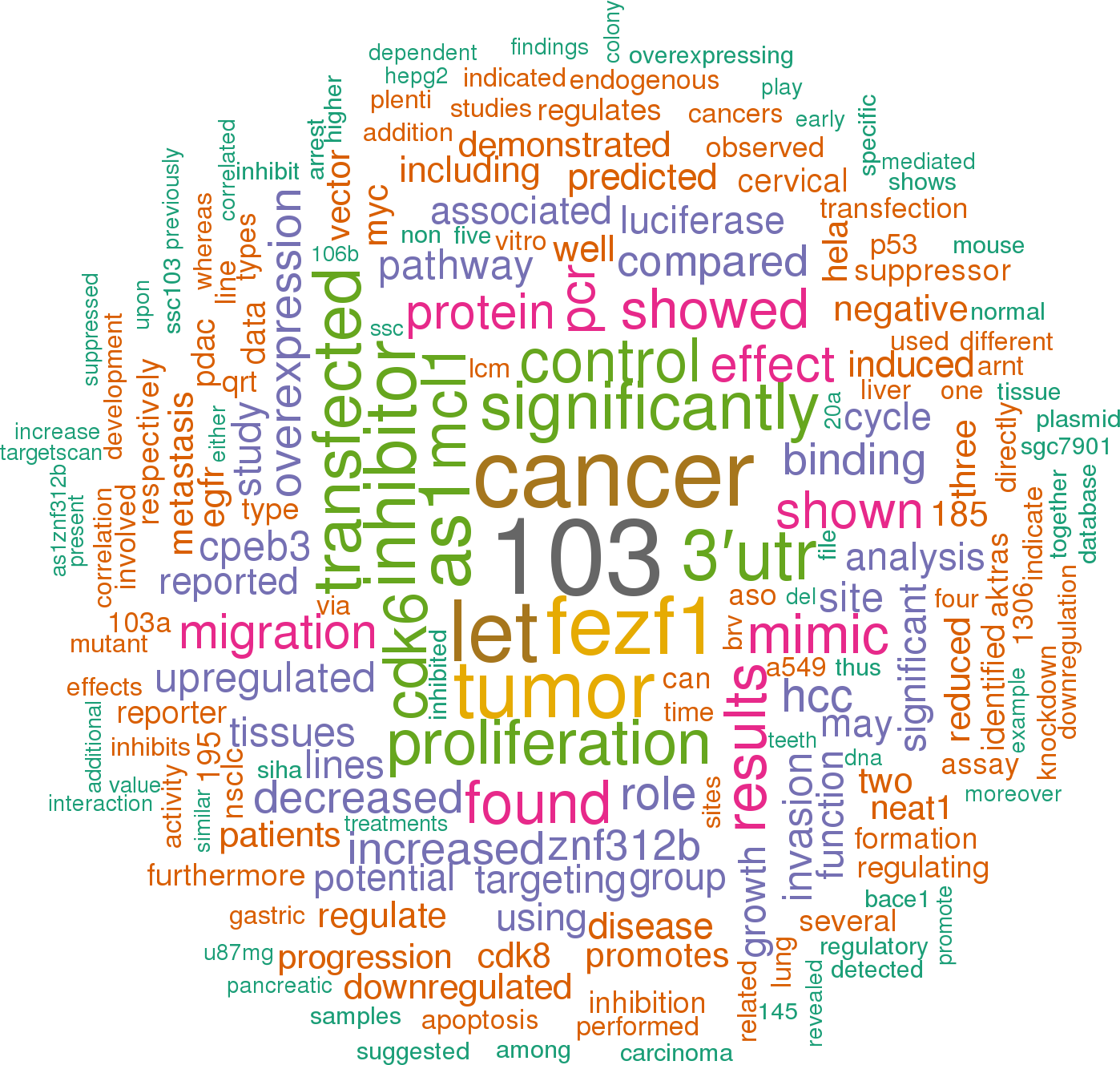
621 open access papers mention hsa-mir-107
(2034 sentences)
(2034 sentences)
Sequence
3324634
reads,
6866.0
reads per million, 188 experiments

cucucugcuuucAGCUUCUUUACAGUGUUGCCUUGUggcauggaguucaAGCAGCAUUGUACAGGGCUAUCAaagcacaga
.(((.((((((.((((.((.(((((((((((.(((.(((.....))))))))))))))))).))))))...)))))).)))
.(((.((((((.((((.((.(((((((((((.(((.(((.....))))))))))))))))).))))))...)))))).)))
Structure
c   c      --c    U  U           C   U   a
 ucu ugcuuu   AGCU CU UACAGUGUUGC UUG ggc u
 ||| ||||||   |||| || ||||||||||| ||| ||| g
 aga acgaaA   UCGG GA AUGUUACGACG Aac uug g
-   c      CUA    -  C           -   -   a
Annotation confidence
High
Do you think this miRNA is real?
Comments
This miRNA was identified by homology to miR-103 [1], and later verified by cloning in human [2].
Genome context
chr10: 89592747-89592827 [-]
Disease association
hsa-mir-107 is associated with one or more human diseases in the Human microRNA Disease Database
| Disease | Description | Category | PubMed ID |
|---|
Database links





Mature hsa-miR-107-5p
| Accession | MIMAT0050677 |
| Description | Homo sapiens hsa-miR-107-5p mature miRNA |
| Sequence | 13 - AGCUUCUUUACAGUGUUGCCUUGU - 36 |
| Evidence |
experimental
Illumina [1] |
Mature hsa-miR-107-3p
| Accession | MIMAT0000104 |
| Description | Homo sapiens hsa-miR-107-3p mature miRNA |
| Sequence | 50 - AGCAGCAUUGUACAGGGCUAUCA - 72 |
| Evidence |
experimental
cloned [2] |
| Database links |

|
| Predicted targets |



|
References
|